

When it comes to home improvement projects, deciding between a DIY approach and hiring a professional carpenter can be challenging. While some tasks are perfect for weekend warriors, others require the expertise and precision of a seasoned pro. Here’s a guide to help you determine when to roll up your sleeves and when to call in a carpenter.
1. Assessing Your Skill Level
Before starting any project, honestly evaluate your skills. Basic tasks like installing shelves or simple trim work can be DIY-friendly. However, complex projects such as custom cabinetry, structural framing, or intricate joinery often demand professional craftsmanship.
Cutting and installing baseboards is one thing—installing crown molding on a sloped ceiling is an entirely different challenge. With baseboards, the process is straightforward: you miter at 45 degrees for inside and outside corners. Occasionally, you’ll need to cut at half of 45 degrees, and every miter saw has a mark at 22.5 degrees to guide you. Even if you’ve never made mitered cuts before, a few practice cuts will get you there. All you need is a miter saw and either a pneumatic nail gun with a compressor or a battery-powered nailer. The total investment in tools starts at around $200–$300.
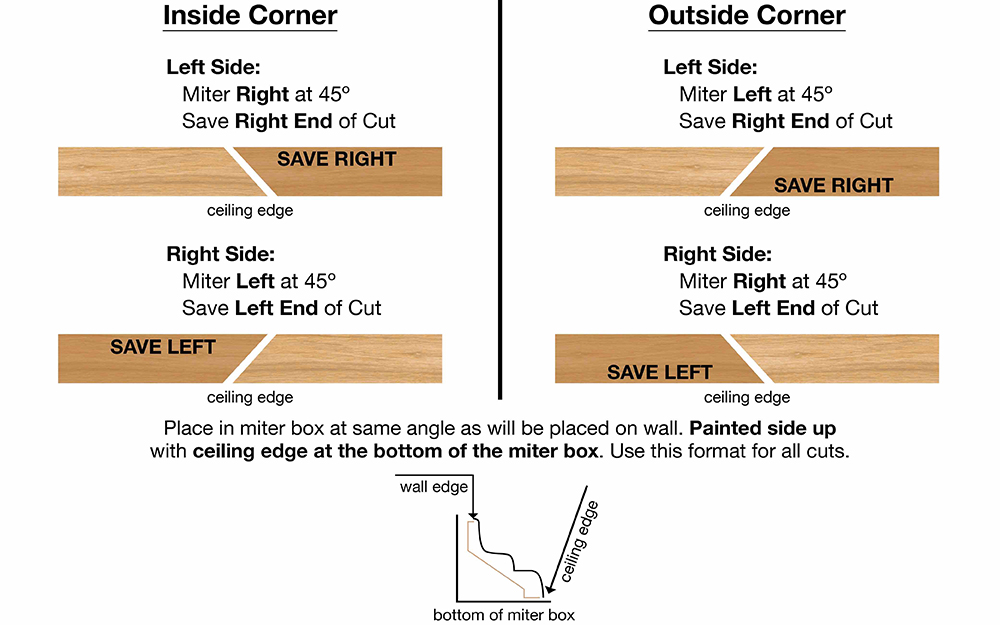
Now, let’s talk about crown molding. It’s not just a simple mitered cut. To make your life easier, you’ll need a dual-bevel miter saw (10–12 inches), which runs about $400–$600 from major brands at big-box stores. If you are not planning on keeping it - you can rent one. But still - extra money. Here is a diagram on how to cut crown molding. You noticed that it is a little different from cutting baseboard.
I remember a job site I was called to years ago. A general contractor and several workers were remodeling a three-level townhome in Sterling. In the garage, they had set up a beautiful 12-inch Bosch dual-bevel miter saw—brand new, with the box still sitting in the corner. Nearby, there was a growing pile of incorrectly cut crown molding. The crew, all experienced remodelers, had no trouble with basic finish carpentry—baseboards, quarter round, or door and window trim. But when it came to the tricky angles required for crown molding on a sloped ceiling, they were stuck. That’s when they needed someone who knew the little tricks of the trade.
2. Understanding Project Complexity
Simple projects with clear instructions are ideal for DIY. As the complexity increases—like building a deck, installing crown molding, or creating built-ins—the margin for error narrows. Professionals have the knowledge to handle intricate details and ensure structural integrity.
3. Time Considerations
DIY projects often take longer, especially if you're learning as you go. If you have limited time or need the job completed quickly, hiring a carpenter can save you stress and ensure timely completion.
4. Budget Factors
DIY can save money on labor costs, but mistakes can be costly. Misaligned cuts, improper installations, or material waste can add up. While hiring a pro may seem more expensive upfront, it often results in higher-quality work and fewer costly errors.
5. Safety Concerns
Projects involving power tools, heavy lifting, or structural modifications pose safety risks. If a task requires specialized equipment or carries a high risk of injury, it's wise to hire a professional with the proper training and safety gear.
6. Legal and Code Requirements
Some projects require permits and must meet building codes. Professionals are familiar with these regulations and can ensure your project complies with local laws. DIY work that doesn't meet code can lead to fines or issues during home resale.
7. Tools and Equipment
Consider the tools required for the job. Basic hand tools might suffice for DIY, but specialized carpentry tools can be expensive to rent or buy. Professionals come equipped with everything needed to complete the project efficiently.
8. Quality Expectations
For high-visibility projects where aesthetics matter, professional craftsmanship often outshines DIY efforts. A carpenter's attention to detail can make a significant difference, especially in custom furniture, built-ins, and finish carpentry.
9. Project Scope
Large-scale renovations or structural changes typically require a team effort. Professionals can manage multiple aspects of a project, coordinate with other trades, and ensure everything runs smoothly.
10. Peace of Mind
Hiring a professional offers peace of mind. You can trust that the job will be done correctly, on time, and to a high standard. Plus, many pros offer warranties, providing additional security for your investment.
Deciding between DIY and hiring a carpenter depends on your skills, budget, timeline, and project complexity. By weighing these factors, you can make an informed choice that ensures your home improvement project is a success.